Buying in Coconut Grove often comes down to one big question: do you want the ease of a condo or the space and privacy of a townhome? If you are drawn to the Grove’s bayside setting, walkable village core, and mix of older charm and newer luxury, that choice can feel more nuanced than it first appears. The good news is that once you understand how Coconut Grove is built, how Florida associations work, and what daily life looks like in each property type, the right fit becomes much clearer. Let’s dive in.
Why Coconut Grove Feels Different
Coconut Grove is one of Miami’s oldest neighborhoods, and it has a distinct feel that many buyers notice right away. You get tree-lined streets, a compact village center, and a lifestyle tied closely to the bay, parks, dining, and outdoor living.
That lifestyle matters when you compare a condo and a townhome here. In the Grove, your decision is often about more than square footage because walkability, water access, and how you want to spend your time can carry just as much weight.
The neighborhood also has planning overlays known as Neighborhood Conservation Districts 2 and 3. These stricter local standards help shape a housing mix with smaller-scale infill, boutique buildings, and a blend of older and newer homes instead of large tract-style development.
In practical terms, that means Coconut Grove often splits into two broad housing experiences. You will usually see amenity-rich condos near the bay and village core, along with smaller townhome or villa-style communities that offer a more private, house-like feel.
Condo vs Townhome Basics
Before you compare floor plans, it helps to understand the legal structure behind each option. In Florida, that structure can affect your monthly costs, maintenance responsibilities, and long-term flexibility.
How condos work in Florida
Florida condominiums are governed by Chapter 718. In a condo, the association is generally responsible for maintaining common elements and other property it is required to maintain, and common expenses can include operations, maintenance, insurance, security, and similar building costs.
For buyers, that often translates into a more managed lifestyle. It can also mean your monthly dues carry more of the property’s ongoing costs, especially in larger buildings with more services and shared amenities.
A major point to know is that Florida requires milestone inspections and structural integrity reserve studies for condo buildings that are three habitable stories or higher. In real life, that can influence reserve funding, monthly dues, and the chance of special assessments.
How townhomes often work in Florida
Townhome communities are often governed by Chapter 720 as homeowners’ associations. In that setup, the association’s powers and duties come from the recorded governing documents, and reserve structures are more flexible than they are in condominiums.
That flexibility can be appealing, but it also means you need to read the documents carefully. If reserves are not fully funded, the association’s financial reporting must warn that special assessments may be needed.
Exterior rules can also vary. HOA control over changes to the outside of the home depends on what the declaration and published standards actually authorize.
Why the label can be misleading
This is especially important in Coconut Grove: the word townhome does not automatically mean fee-simple ownership or minimal association involvement. Some newer projects include townhome-style residences inside condo developments, so the recorded documents matter more than the marketing language.
That is one of the biggest reasons buyers should compare the legal structure first and the facade second. What looks like a private, house-like townhome may still operate under condominium rules.
What Condo Living Looks Like in Coconut Grove
Coconut Grove’s condo options include both waterfront luxury towers and boutique mid-rise buildings. Many current developments emphasize bayfront or waterfront positioning and a lifestyle-driven experience tied to the Grove itself.
If you want a lock-and-leave property, a condo can be a strong fit. You may value being close to the village center, having easier access to parks and waterfront destinations, and spending less time thinking about exterior upkeep.
That can feel especially attractive in a neighborhood where daily life often revolves around places like Peacock Park, Regatta Park, and Dinner Key Marina. If you picture yourself stepping out for a walk, enjoying the bay, or keeping your routine simple, condo living lines up well with that rhythm.
Condo advantages
- Easier day-to-day exterior maintenance
- A more managed, lock-and-leave lifestyle
- Often closer to waterfront and village-core locations
- Shared costs for building operations, insurance, and common areas
Condo tradeoffs
- Higher monthly dues can reflect building-wide services and reserves
- Building rules may affect renovations, rentals, or daily use
- Milestone inspections and reserve requirements can affect future costs
- Special assessments are an important due diligence item
What Townhome Living Looks Like in Coconut Grove
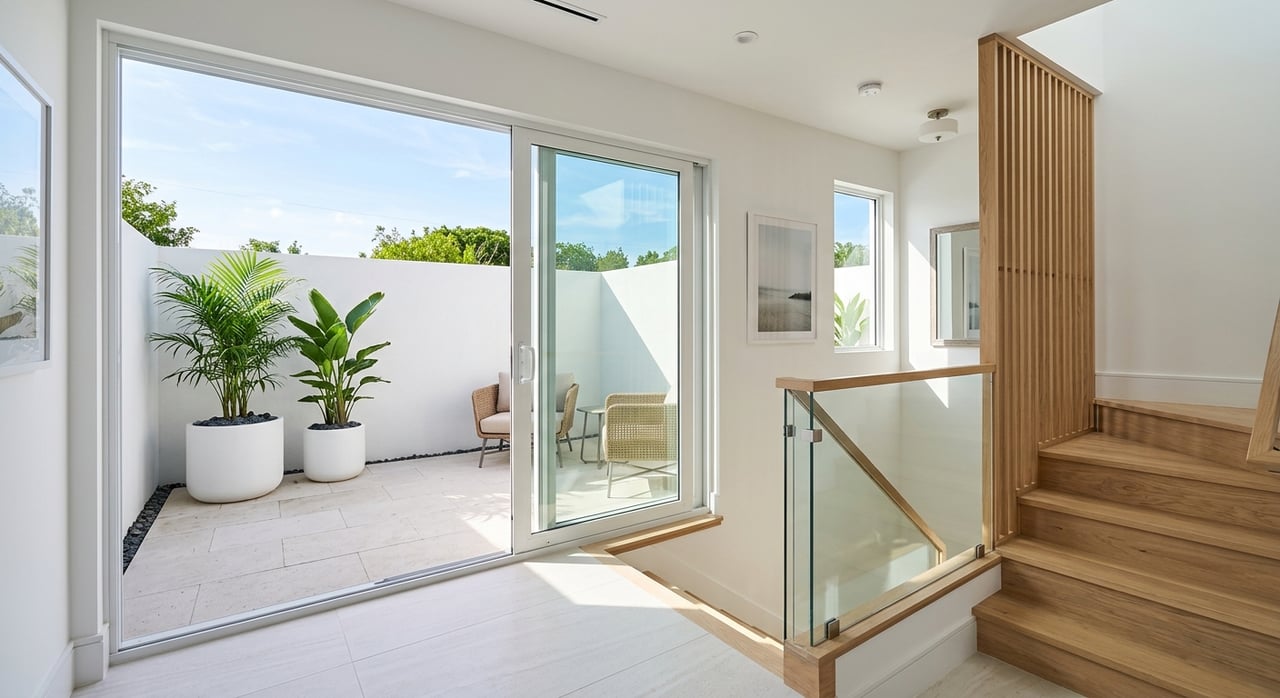
Townhomes in Coconut Grove often show up in smaller, design-focused communities. Some newer offerings feature details like private gardens and dramatic ceiling heights, while others aim for a more intimate, residential feel than a larger condo building.
If you want more separation, a private entrance, or a little more room to spread out, a townhome may feel like the better answer. In Coconut Grove, that can mean getting a more house-like experience without taking on a full single-family lot.
For many buyers, the appeal is simple: you want usable space, storage, and a layout that lives more like a home. That can be especially valuable if you work from home, need multiple levels, or prefer some outdoor area of your own.
Townhome advantages
- More private, house-like layout
- Often better for storage and flexible living space
- Private entry may offer more separation from shared areas
- Outdoor space may be more accessible than in a typical condo
Townhome tradeoffs
- Maintenance responsibility may shift more to you
- HOA services and reserve structures can vary widely
- Exterior changes may still be controlled by the association
- Some townhome-style homes are legally condos, not traditional HOAs
How Your Lifestyle Should Guide the Choice
The best option usually depends on how you want to live, not just what looks best in photos. In Coconut Grove, both property types can work beautifully, but they solve different problems.
If you want walkability and simplicity
A condo is often the cleaner fit if your top priorities are convenience and ease. That is especially true if you want a property that supports a car-light lifestyle near shopping, parks, and everyday destinations.
The Grove’s trolley service also reinforces that appeal. Because it serves the historic neighborhood and provides access to parks, shopping areas, and City Hall, some buyers find that condo living fits naturally with how they want to move through the neighborhood.
If you want more room and privacy
A townhome often makes more sense if you want a second bedroom, a home office, more storage, or a bit more breathing room. It can also appeal if you like the idea of a private entrance and less reliance on shared indoor spaces.
For buyers who are balancing lifestyle and practicality, this can be the sweet spot. You get a more residential feel without stepping all the way into single-family ownership.
If you are downsizing
Downsizers often lean condo when the goal is lower day-to-day responsibility and a more full-service setup. Others still want less space than a house, but prefer the privacy of a townhome and maybe some outdoor area.
In that case, the key comparison is not just price. You will want to compare the full carrying cost, including what the association covers and what you still need to manage on your own.
The Most Important Due Diligence Questions
In Coconut Grove, details matter. Since the market includes both true condos and townhome-style residences inside condo projects, your document review is one of the most important steps in the process.
For a condo, ask for:
- Current budget
- Reserve information
- Milestone inspection summary
- Structural integrity reserve study
- Insurance policies
- Recent meeting minutes
- Any pending special assessments
- Any rental restrictions
For a townhome HOA, ask for:
- Declaration and rules
- Current budget
- Reserve policy
- Maintenance responsibility matrix
- Architectural standards for exterior changes
These records help you see what your dues actually cover and where future costs might come from. They also give you a clearer picture of how much flexibility you will have once you own the property.
So, Which One Is Better?
In Coconut Grove, there is no one-size-fits-all answer. A condo usually wins on convenience, shared services, and lock-and-leave ease, while a townhome often wins on autonomy, private space, and a more house-like layout.
The smarter question is this: which set of tradeoffs fits your life right now? If you know how much maintenance you want to handle, how important privacy is to you, and how comfortable you are with association structure and monthly costs, your decision becomes much easier.
The Grove is a special market because it offers both lifestyle-rich condos and more intimate townhome living within the same neighborhood fabric. If you want help comparing options, reviewing how a property is actually structured, and narrowing your search to the right fit, Team Citron is here to guide you with local insight and thoughtful, high-touch support.
FAQs
What is the main difference between a condo and a townhome in Coconut Grove?
- In Coconut Grove, a condo usually offers more shared maintenance and building-managed living, while a townhome often offers more private, house-like space. The recorded documents matter because some townhome-style homes are legally condos.
Are condo fees in Coconut Grove worth it?
- They can be, if you value convenience, shared services, and less exterior upkeep. You should still review the budget, reserves, inspections, insurance, and any special assessments to understand the full cost.
Do Coconut Grove townhomes always have fewer rules than condos?
- No. Townhome communities may still have significant HOA rules, especially for exterior appearance and maintenance. The actual restrictions depend on the governing documents.
Is a condo or townhome better for downsizing in Coconut Grove?
- It depends on your priorities. A condo may fit better if you want simpler day-to-day living, while a townhome may fit better if you still want a private entrance, some outdoor area, and a more residential feel.
Why is document review so important for Coconut Grove buyers?
- Coconut Grove includes both traditional condos and townhome-style residences inside condo projects. Reviewing the governing documents helps you understand ownership structure, maintenance responsibility, reserves, and future costs.