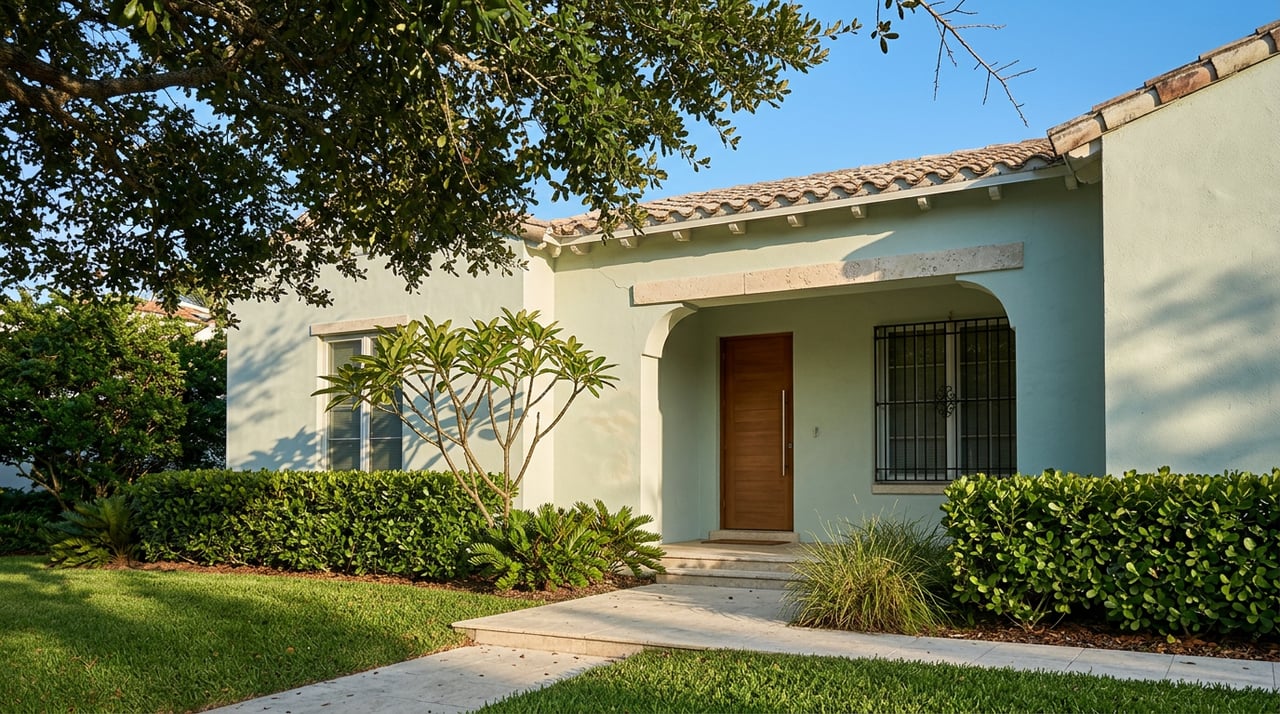
Walk Sunset Drive from Red Road on almost any Saturday morning and you will pass the same landmarks everyone in High Pines already knows by heart. The tennis courts fill up early. Dogs pull their owners toward the shade. Somewhere past the oaks, a low wood-and-limestone cottage sits back from the road, easy to miss if you are not looking for it.
Most people are not looking for it. That is the part worth stopping on.
The cottage belongs to the Tropical Audubon Society, and it runs a fuller calendar than almost anything else within walking distance in High Pines. Free docent tours. A concert series now in its sixteenth season. A weekend festival built for kids. Most of it costs nothing, most of it happens rain or shine, and most High Pines residents have driven past the building for years without knowing it is open to them at all.
The Park Everyone Already Uses
Start where everyone starts: Dante Fascell Park on Red Road. It is the neighborhood's known quantity, the place with six tennis courts, a jogging trail, two picnic shelters, outdoor fitness equipment, a volleyball court, a basketball half court, and a sculpture garden donated by South Miami's sister city of Medellín, Colombia. If you live in High Pines, you have probably logged laps here without thinking twice about it.
That familiarity is exactly why the park is worth mentioning first. It sets the baseline for what a neighborhood amenity looks like here: public, well used, visibly maintained. The next stop on the same stretch of road meets that same standard and gets a fraction of the foot traffic.
The House Next Door Nobody Walks Into
A few blocks over on Sunset Drive, at 5530, sits the Doc Thomas House. It was built in 1932 for Arden Hayes Thomas, a local pharmacist and feed store owner known around town as a kind of self-appointed community doctor, respected enough that neighbors brought him their worries even though he held no medical degree. The house was designed by architect Robert Fitch Smith in a Florida vernacular style, with tidewater red cypress paneling in the living room, floors of pegged oak, walnut, and mahogany, and a towering native limestone fireplace crowned with an illustration of a Great Egret, a nod to the man's connection to the National Audubon Society.
Thomas had no direct heirs. When he died, he deeded the house and most of its surrounding land to the Tropical Audubon Society specifically so the property would never be developed. The society took formal possession in April 1976, and the surrounding 2.2 acres, named the Steinberg Nature Center in 2012, still hold pine rockland and tropical hardwood hammock in the middle of one of South Miami's busiest commercial corridors. The house itself is listed on the National Register of Historic Places, designated a Florida Heritage Site, and recognized as a Dade County Historic Site.
None of that requires a membership or a ticket. The Tropical Audubon Society offers free guided tours of the house on select afternoons, along with self-guided walks through the nature center's pollinator gardens and demonstration forests.
What Actually Happened There This Year
The house is not a static museum piece. It runs programming through the year, and 2026 alone shows how often the property actually gets used.
| When | What Happened |
|---|---|
| January 31 | The Conservation Concert series opened its sixteenth season under the oaks, with founding act Take Sixx returning to the Doc Thomas House's outdoor stage. |
| February 13 to 16 | Bird Day, a free annual family festival, filled the Steinberg Nature Center grounds with games and guided exploration for young birders. |
| April 26 | Members Migration paired a conservation awards ceremony with live bluegrass from The Wire Jays, a University of Miami Frost student group, plus a guided bird walk through the property. |
That is three separate public events across four months, on top of the seasonal house tours that run throughout the year, and each one is billed as a recurring annual fixture rather than a one-off. For a residential pocket the size of High Pines, that is an unusual amount of free civic programming sitting quietly behind a hedge line most people associate with a nice old house and nothing more.
One detail worth sitting with: the reason these 2.2 acres of hardwood hammock have survived while the corridor around them filled in with new construction and office buildings is a single decision made fifty years ago by a man who wanted the land protected, not developed. That choice is the entire reason the property exists today for anyone in High Pines to walk into for free.
Where the Walk Ends
Close the loop back on Sunset Drive at Whip 'n Dip Ice Cream Shoppe, at 1407 Sunset Drive. George Giampetro Sr. and his wife Nancy opened the shop in 1985, and it has stayed in the family since, with their son George Jr. involved in the business for decades. The shop churns its ice cream on site rather than serving pre-made mix, and the flavor list runs from straightforward chocolate and vanilla to house creations like smoke roasted pistachio and a locals-only mango.
Whip 'n Dip marked its 40th anniversary over the July 4th weekend in 2025 with a full block-party treatment: face painting, balloon animals, a photo wall, and the return of the CAT9 challenge, a nine-scoop, nine-topping eating contest that has become something of a rite of passage for graduating students in the area. The shop also runs an informal neighborhood tradition called the Mango Swap, where residents trade backyard mangoes for ice cream creations built around the fruit, a small exchange that has kept the shop tied into the neighborhood well past its original opening year.
Why the Loop Matters More Than It Looks
None of these three stops individually reads as a destination. A park is a park. An ice cream shop is an ice cream shop. A historic house with a bird calendar sounds like the kind of thing you visit once with an out-of-town relative and never again.
Put them together, though, and you get something less common than any one piece suggests: a half mile of Sunset Drive and Red Road that offers a full afternoon of free, recurring, walkable programming without requiring a car, a reservation, or a ticket, anchored by a piece of protected land that exists purely because one resident decided, decades ago, that it should stay wild. That is not a generic suburban amenity list. That is a specific, dated, named set of reasons High Pines functions the way it does on a Saturday.
If you already live here, next January's Conservation Concert or next February's Bird Day festival are worth putting on the calendar the same way you'd note a favorite restaurant's new hours. If you are the kind of person who tracks what makes a neighborhood's day-to-day life work, the fact that a 94-year-old protected cottage is doing more community-building than most paid amenities nearby says something real about how High Pines holds together.
If you are curious what living inside that kind of neighborhood has done for your own property's value, Team Citron offers a free home valuation built on the same local knowledge that put this walk together. We know these streets because we work them, and we would rather talk you through what your High Pines home is worth today than hand you a generic number pulled from a portal.