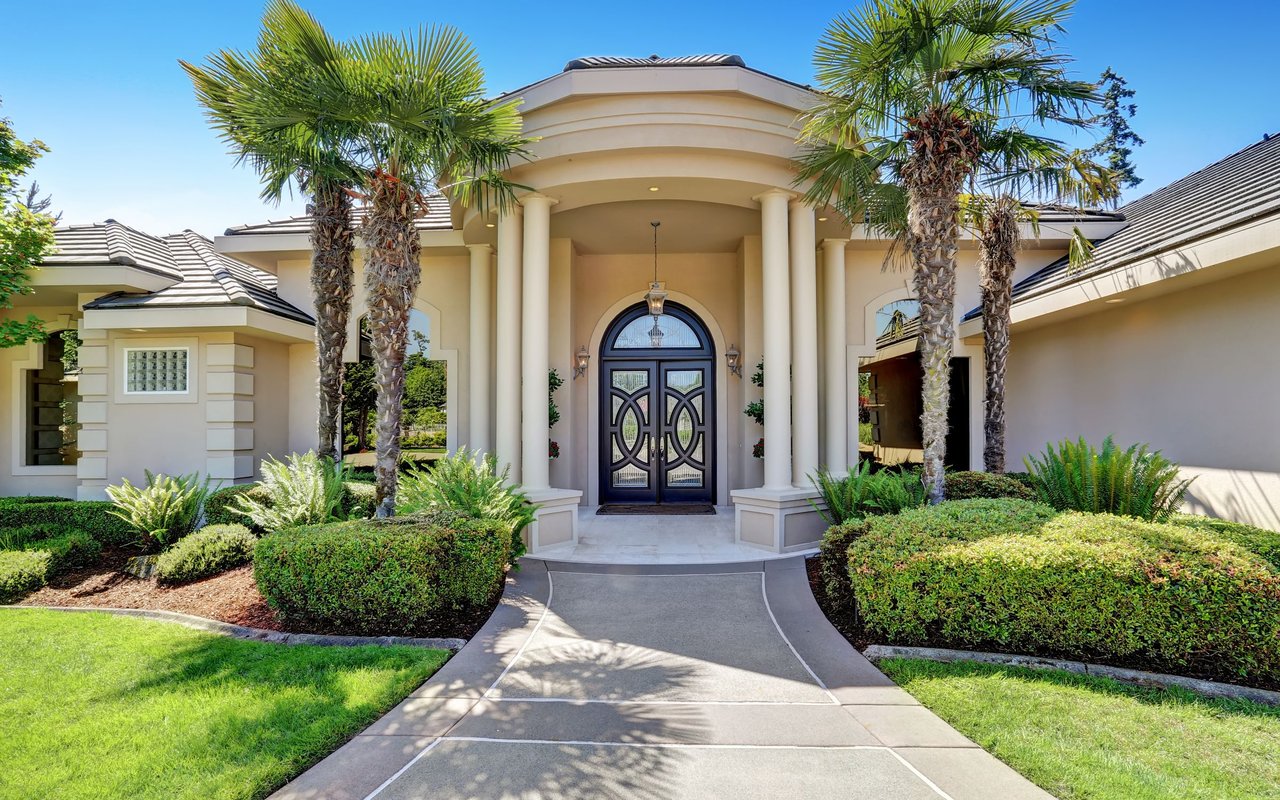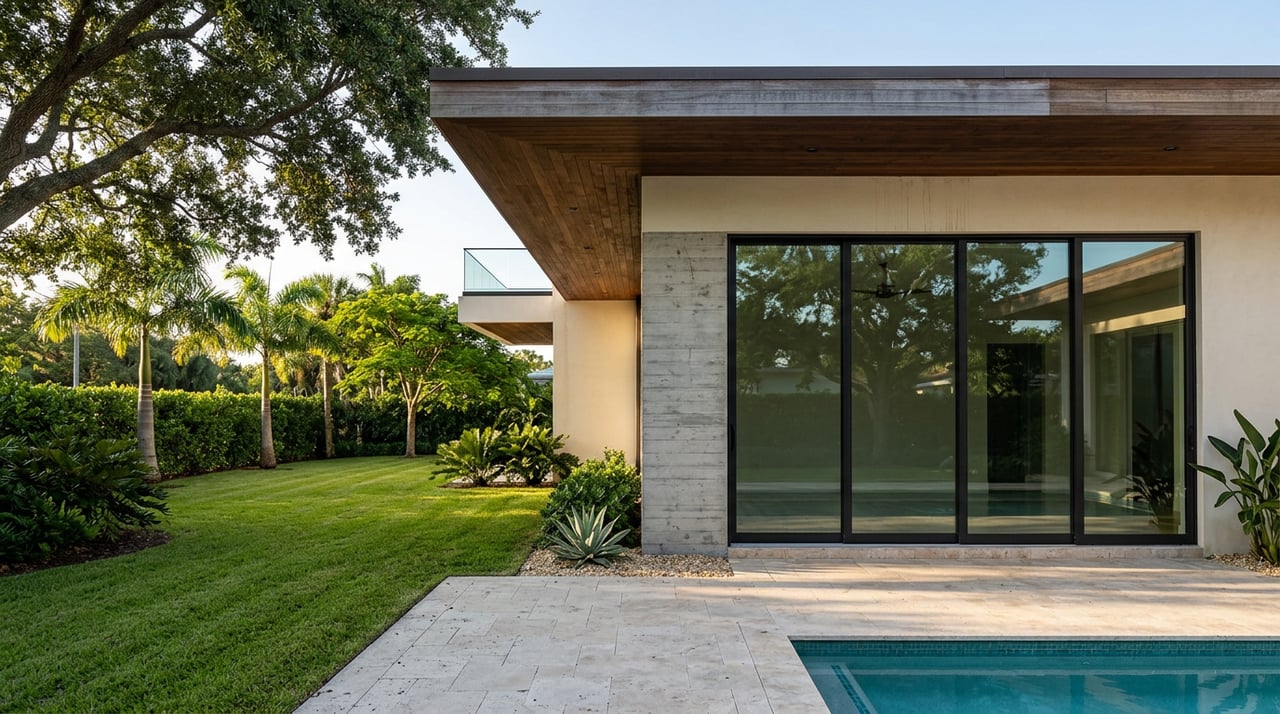
Why would anyone pay a premium to live somewhere with no mayor, no city council, and no municipal building department? That is the question a lot of relocators quietly ask themselves when they first look at Ponce-Davis, a pocket of large-lot estates wedged between Coral Gables and Pinecrest. It has no incorporated government of its own. It never has. And yet homes here consistently trade in a price band that sits between its two far more famous, fully incorporated neighbors.
The usual explanation is lifestyle: tree canopy, privacy, big lots, a handful of celebrity homeowners. All true, and all things you can read on a dozen other neighborhood guides. What those guides skip is the mechanism. The lack of a city hall is not a gap in the neighborhood's resume. For a specific kind of buyer, it is the resume.
The Paperwork Puzzle
Ponce-Davis sits in unincorporated Miami-Dade County. That single fact determines which building department has authority over your project, and it has nothing to do with what your mailing address says. Miami-Dade County's own permitting guidance is explicit on this point: the county's Regulatory and Economic Resources department issues permits only for properties whose folio numbers start with "30." If your folio starts with anything else, you are inside a city like Coral Gables or Miami, and you file with that city's building department instead, not the county's.
That distinction catches people off guard during due diligence. A buyer touring a home in Ponce-Davis, then one a few blocks over in Coral Gables, can reasonably assume both projects will move through the same process. They will not. One goes through Miami-Dade County's building permit system, the other through a separate municipal review with its own staff, its own queue, and in Coral Gables' case, its own architectural oversight. Confirming the folio number before you fall for a lot is not a formality. It tells you which government you will be negotiating with for the next year of your life.
2018: The Year Coral Gables Tried to Annex It
This is not a hypothetical governance debate. It already happened once, in public. In 2018, the City of Coral Gables proposed annexing Ponce-Davis along with the neighboring community of High Pines. Miami-Dade County rejected the proposal in 2019, along with a similar bid to annex the unincorporated community of Little Gables.
Read that sequence again. A well-established, historically prestigious city looked at this pocket of estate lots and wanted it inside city limits. The county said no. Residents were not lobbying to become part of Coral Gables. If anything, the years since have shown the opposite pattern: new construction activity in Ponce-Davis has kept accelerating precisely because it stayed outside that boundary.
Being surrounded by two cities that everyone already knows is not the same as needing to join one of them.
What the Time Difference Is Actually Worth
Here is where the governance trivia turns into money. Because Ponce-Davis sits in unincorporated territory, plan review runs through the county rather than a municipal architectural review board. For a buyer planning a teardown or a full renovation, that can shave months off a build timeline, sometimes close to a year, compared to navigating a city process layered with additional design review. If you are carrying a construction loan or paying rent while your permanent home gets built, a year is not an abstraction. It is a number on a spreadsheet.
That advantage does not mean the county waives scrutiny. Miami-Dade sits entirely inside the High Velocity Hurricane Zone, so every project here, unincorporated or not, still requires stricter wind-load ratings and structural sign-off than almost anywhere else in the country. What changes is the layer above code compliance: the design-review bureaucracy that incorporated cities add on top of the baseline. Ponce-Davis skips that layer. Coral Gables does not.
The county also updated its building fee schedule on October 1, 2025, its first increase in over 17 years, with fees calculated as a percentage of projected construction cost. For a market where teardown-and-rebuild is common, that fee structure is one more variable worth pricing into a renovation budget before you close.
| Ponce-Davis (unincorporated) | Coral Gables (incorporated) | |
|---|---|---|
| Permitting authority | Miami-Dade County RER | City of Coral Gables Building Department |
| Design/architectural review | County-level only | Additional municipal review layer |
| Typical build timeline impact | Months, sometimes near a year, faster | Longer due to added review steps |
| Governing body | Miami-Dade County | City council and mayor |
What the Sales Data Actually Shows
The neighborhood's pricing tells the same story as its paperwork. As of June 2026, homes in Ponce-Davis were listed as running from roughly $9 million to $25 million, with land values reaching as high as $8 million per acre. But that top-tier figure only tells part of the story. Miami MLS records show a much wider spread of activity moving through the neighborhood in the year leading into 2026, with list prices on closed transactions ranging from under $2 million for older, smaller homes to $19.5 million for a full estate that closed in October 2025. A 9,043 square foot property on SW 86th Terrace listed at $17.25 million that same month, while a 3,256 square foot home on SW 51st Avenue carried a $2.99 million list price when it sold in September 2025.
That is not a single market. It is two markets sharing a boundary line. Legacy homes, some dating to the 1940s, trade at a real discount to fully renovated or new-construction product on comparable lots. New construction itself remains scarce. As of April 2026, a newly completed estate at 5545 SW 81st Terrace, developed by SL5 Developments and listed through Douglas Elliman, was on the market at $22 million as one of only two new-construction homes on a full acre in the neighborhood, and the only one move-in ready. When supply of finished new product is that thin, buyers end up choosing between an older home that needs real investment and a rare newly built one that commands a premium for saving them the wait. The unincorporated permitting advantage is exactly what makes that second option viable at all.
Reading the Comparison Correctly
Market analysts who track all three neighborhoods describe a consistent pattern: Coral Gables commands a higher price per square foot for comparable condition, driven by its historic designation and stricter design review. Pinecrest tends toward the highest absolute prices on its largest estate parcels. Ponce-Davis typically lands between the two for comparable product, which is precisely what you would expect from a neighborhood that borrows Coral Gables' canopy and Pinecrest's lot sizes without either city's added layer of municipal process.
None of that means Ponce-Davis is a bargain. It means the price reflects a real tradeoff: you give up the name recognition of an incorporated address, and in exchange you get a faster, county-level path to actually building the home you want on the lot you bought.
What This Means If You're Touring
Before you get attached to a lot here, ask your agent to confirm the folio number and jurisdiction directly, not just the neighborhood name a listing uses for marketing. Streets like Ponce De Leon Road, Irwin, and the area around Schoolhouse Road sit inside the unincorporated boundary, but marketing copy across multiple sites has occasionally blurred the lines between Ponce-Davis, South Miami, and Coral Gables addresses. If you plan to renovate or rebuild, that folio number is the single most useful piece of due diligence you can do before you write an offer.
A few common questions worth settling upfront:
- Is Ponce-Davis its own city? No. It is an unincorporated community governed by Miami-Dade County, bordered by Coral Gables on the north, east, and south, and by the City of South Miami to the west.
- Are there gated sections within it? Yes. The neighborhood itself has no single gate, but sub-areas such as Stonegate operate as gated, guard-attended enclaves within the larger footprint.
- Does unincorporated status mean lighter building codes? No. Every property here still falls under Miami-Dade's High Velocity Hurricane Zone requirements. What differs is the review layer above code compliance, not the code itself.
The Takeaway
The paperwork is the point. Ponce-Davis prices where it does because the absence of a city hall is a working advantage for anyone planning to build, not a missing amenity. That is not a story you will find in a listing description built around canopy trees and celebrity neighbors. It is the reason those canopy trees keep shading newly built homes instead of vacant lots.
If you are weighing Ponce-Davis against Coral Gables or Pinecrest and want to understand what a specific lot's folio number and zoning actually allow, Team Citron can walk you through it street by street. Get a Free Home Valuation and we will tell you exactly where your property, or your next one, actually stands.